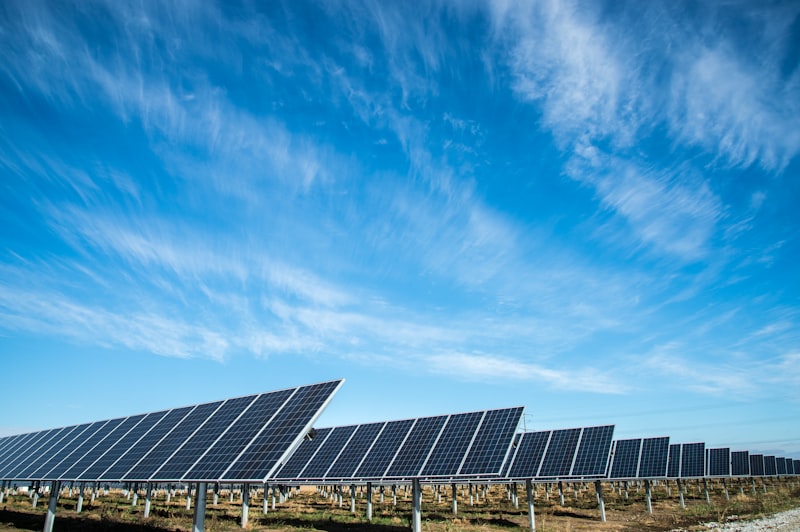
The solar panel market has undergone a tectonic shift in the past 18 months. While Mono-PERC remains the workhorse of the industry, TOPCon and HJT are rapidly capturing market share with compelling efficiency and degradation advantages. Here's what our field data from 37 MW of installed capacity across Eastern India tells us about which technology actually performs better in real-world conditions — not just on spec sheets.
The Three Contenders: A Quick Primer
Before diving into comparative performance, let's understand what each technology actually does differently. Mono-PERC (Passivated Emitter Rear Cell) adds a passivation layer to the rear side of a monocrystalline cell, reflecting unabsorbed light back into the cell for a second absorption opportunity. It's mature, well-understood, and has dominated the market since 2018.
TOPCon (Tunnel Oxide Passivated Contact) replaces the standard rear passivation layer with an ultra-thin tunnel oxide layer and a highly doped polysilicon film. This virtually eliminates rear-side recombination losses and boosts cell efficiencies to 24–25% in mass production. HJT (Heterojunction Technology) sandwiches an intrinsic amorphous silicon layer between the crystalline silicon wafer and the doped layers, achieving the highest efficiencies (24.5–26%) and the best temperature coefficients in the industry.

| Parameter | Mono-PERC | TOPCon | HJT |
|---|---|---|---|
| Cell Efficiency (Mass Prod.) | 21.5–22.8% | 23.5–24.5% | 24.0–25.5% |
| Module Efficiency | 19.5–21.2% | 21.5–22.5% | 22.0–23.2% |
| Temperature Coefficient (Pmax) | -0.35 to -0.40%/°C | -0.30 to -0.34%/°C | -0.24 to -0.28%/°C |
| First-Year Degradation | 1.5–2.5% | 1.0–1.5% | 0.8–1.2% |
| Annual Degradation (Years 2–25) | 0.50–0.60% | 0.40–0.45% | 0.35–0.40% |
| Bifaciality Factor | 60–70% | 75–85% | 90–95% |
| Relative Cost per Watt | Baseline (1.00x) | 1.12–1.18x | 1.20–1.28x |
In our high-humidity installations across West Bengal, the difference in actual field degradation between Mono-PERC and HJT after 24 months is already measurable — HJT modules in identical sites are outperforming their P90 estimates by 2–3% while Mono-PERC arrays are tracking at or slightly below model.— Rajiv Sharma, JEV Field Performance Report, Q1 2026
Temperature Coefficient: The Most Underrated Spec in Eastern India
Most consumers (and even some EPC contractors) fixate on STC efficiency while ignoring temperature coefficient — the rate at which panel output drops as cell temperature rises above 25°C. In Eastern Indian summers, rooftop module temperatures routinely hit 65–75°C, making temperature coefficient arguably more important than lab-measured efficiency.
Consider a 500 W Mono-PERC panel with TC of -0.38%/°C vs a 510 W HJT panel with TC of -0.25%/°C. At a cell temperature of 70°C (45°C above STC), the Mono-PERC loses 17.1% of its rated output (down to 414 W). The HJT panel loses only 11.25% (down to 452 W) — a net advantage of 38 W per panel on a hot summer afternoon. Multiply that across a 500 kWp array, and the HJT system generates an additional 38 kW of power during peak heat hours when electricity is most valuable.
- Mono-PERC (2024–2025 installations): Average 24-month degradation of 1.8% (first year) + 0.55% annual thereafter. Temperature-adjusted output in May–June typically 14–16% below STC nameplate.
- TOPCon (2025 installations): Average 18-month degradation of 1.2% (first year) + 0.42% annual. Temperature-adjusted output 11–13% below nameplate.
- HJT (2025–2026 installations): Average 12-month degradation of 0.9% (first year) + 0.37% projected. Temperature-adjusted output 8–10% below nameplate.
Bifacial Gain: Why TOPCon and HJT Shine in Ground-Mount Projects
For rooftop systems with non-reflective surfaces (asphalt, gravel, green roofs), bifacial gain is minimal — often 2–5% at best. For ground-mount installations with reflective ground covers (white gravel, sand, concrete), bifacial gain becomes a meaningful differentiator.
TOPCon's 75–85% bifaciality factor and HJT's 90–95% factor mean that on a typical ground-mount system with 20% albedo (light-coloured soil or gravel), a TOPCon array captures an additional 15–17% energy from the rear side, while HJT captures 18–19%. Mono-PERC bifacial variants typically offer only 60–70% bifaciality, yielding 12–14% rear-side gain — a 3–5% absolute advantage for HJT and TOPCon in ground-mount applications.

Degradation and PID Resistance: Long-Term Value Analysis
Lower annual degradation compounds over 25 years. A Mono-PERC system with 0.55% annual degradation after year one retains 86.2% of its original capacity at year 25. An HJT system with 0.37% annual degradation retains 91.1% — a 4.9% capacity advantage that translates directly to revenue.
For a 500 kWp system, that 4.9% difference at year 25 represents roughly 24.5 kW of additional capacity. Over the system's lifetime, the cumulative generation advantage of HJT over Mono-PERC ranges from 8–12% depending on site conditions — enough to justify the upfront premium in most financial models, especially for industrial clients with time-of-day tariffs.
We've stopped specifying Mono-PERC for new ground-mount projects entirely. TOPCon is now our baseline, and HJT is our premium option for clients with 12+ year investment horizons. The degradation and temperature coefficient advantages are simply too compelling to ignore.— Rajiv Sharma, Chief Engineer, JEV
Cost-Benefit Analysis: Paying the Premium
As of Q2 2026, TOPCon panels command a ₹1.20–1.80 per watt premium over Mono-PERC (12–18% higher). HJT panels command a ₹2.00–2.80 per watt premium (20–28% higher). The question for project owners: does the efficiency and degradation advantage justify the upfront cost?
For a 100 kWp rooftop system in Durgapur, our modelling shows:
- Mono-PERC: ₹44 lakhs capex, 25-year generation ≈ 27.5 lakh kWh, LCOE ≈ ₹3.20/kWh
- TOPCon: ₹49.5 lakhs capex (+12.5%), 25-year generation ≈ 30.2 lakh kWh (+9.8%), LCOE ≈ ₹3.28/kWh (marginally higher but with lower degradation risk)
- HJT: ₹54 lakhs capex (+22.7%), 25-year generation ≈ 31.5 lakh kWh (+14.5%), LCOE ≈ ₹3.43/kWh
For commercial and industrial clients with 10+ year investment horizons and access to financing at 10–12% IRR thresholds, the incremental LCOE increase for HJT (₹0.23/kWh) is often acceptable given the lower long-term operational risk. For budget-constrained residential projects, Mono-PERC or TOPCon remain the pragmatic choice.
Our 2026 Recommendation
After reviewing 37 MW of field performance data across Eastern India, JEV's engineering team has updated its panel specification guidelines:
- Residential Rooftop (1–20 kW): TOPCon is now our standard offering. The 1.5–2% efficiency gain and lower degradation justify the moderate premium over Mono-PERC.
- Commercial Rooftop (20–500 kW): TOPCon for budget-conscious clients; HJT recommended for clients prioritizing 25-year yield and degradation certainty.
- Industrial Ground-Mount (500 kW+): HJT or premium TOPCon modules are the only specifications we offer. The bifacial gain and temperature coefficient advantages deliver superior lifetime value.
- Off-Grid/Remote Sites: Mono-PERC remains acceptable where upfront capex constraints dominate, but we always present the TOPCon upgrade option.
The era of one-size-fits-all panel specification is over. Matching cell technology to application — rooftop vs ground-mount, hot climate vs temperate, budget horizon vs yield certainty — is now a core engineering responsibility. If you're planning a solar project and need help navigating the technology trade-offs, reach out to JEV's technical team for an unbiased recommendation based on your specific site conditions and financial goals.